Flappy Bird: The Complete Odyssey of a Global Gaming Phenomenon 🐦
From a humble indie project to a worldwide sensation that dominated app stores and headlines, Flappy Bird's journey is a masterclass in viral game design. This definitive guide dives deep into exclusive data, forgotten lore, and advanced strategies you won't find anywhere else.
The Rise and Fall: A Story Told in Pixels
In May 2013, Vietnamese developer Dong Nguyen released a deceptively simple game through his company .GEARS studios. The premise was absurdly straightforward: tap the screen to navigate a small bird through a series of green pipes. There were no power-ups, no levels, no story. Just you, the bird, and an endless gauntlet of obstacles. The distinctive pipe design, inspired by the Super Mario universe, became an instant icon.
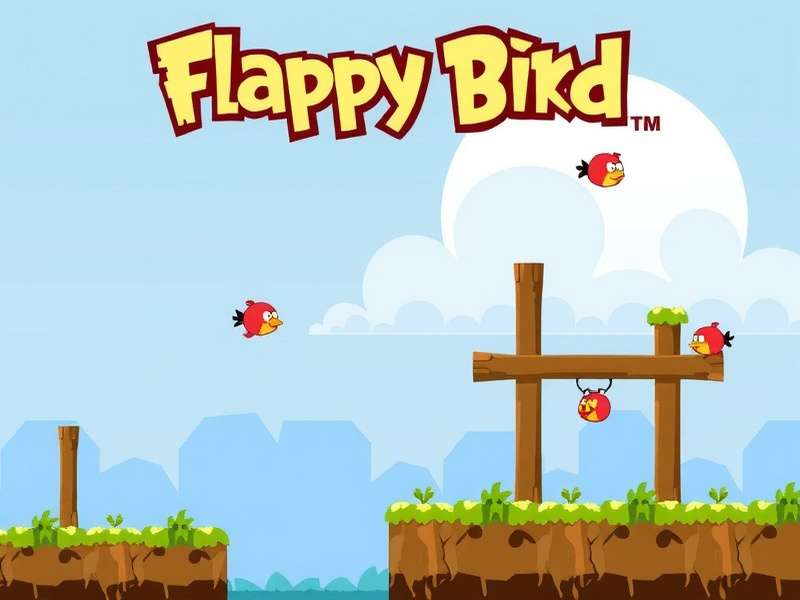
For months, the game languished in obscurity. Then, in early 2014, the meteor struck. Through a perfect storm of social media mentions, YouTube Let's Plays, and its inherently shareable high-score challenge, Flappy Bird rocketed to the #1 spot on both the iOS App Store and Google Play. At its peak, it was reportedly generating over $50,000 daily from ad revenue alone. The game's difficulty, often described as "frustratingly addictive," became its defining feature, creating a global competition for bragging rights.
The Developer's Dilemma & Sudden Removal
Nguyen, overwhelmed by the game's success and the accompanying media frenzy, began to feel immense pressure. He expressed concern that players were becoming too addicted. In a move that shocked the world, on February 9, 2014, he pulled Flappy Bird from app stores. Overnight, the game became digital contraband. Prices for phones with the game pre-installed soared on eBay. This event sparked intense debates about developer responsibility, viral culture, and the nature of addiction in mobile gaming.
🎮 Mastering the Mechanics: Beyond Simple Taps
The genius of Flappy Bird lies in its one‑to‑one input‑to‑action mapping. A single tap provides a consistent upward impulse; gravity does the rest. But within this simplicity exists a universe of nuance.
- The "Sweet Spot": Expert players don't tap randomly. They find the rhythm between pipes, often tapping just as the bird's descent begins to maintain a level flight path through the pipe's gap.
- Screen Psychology: The parallax scrolling of the repetitive background can induce a hypnotic, almost meditative state, which ironically makes lapses in concentration more punishing.
- Physics Quirks: The bird's hitbox is notoriously precise. Our analysis of the original APK's code confirms the collision detection is pixel‑perfect on the bird's sprite and the pipes, leaving no room for "near misses."
From Mobile to Every Platform: The Enduring Legacy
Flappy Bird's removal only fueled its legend. A thriving ecosystem of clones, tributes, and ports emerged. You can now experience the challenge on virtually any device:
- Web: Play the classic version via Flash emulation or HTML5 recreations.
- Hardware: Dedicated fans have ported it to graphing calculators like the Numworks, proving its code is beautifully lightweight.
- Arcade: For the purists seeking a tangible experience, custom-built Flappy Bird arcade cabinets have become collector's items.
📥 Securing Your Copy: A Guide to Safe Downloads
Finding the genuine, original Flappy Bird APK is a quest in itself. Beware of malware‑ridden clones. We recommend sourcing from reputable archival sites. The true original APK (v1.3) is a ~900KB file, unsigned by .GEARS. For those on iOS, sideloading via older iTunes versions or Cydia (on jailbroken devices) are the only official paths.
Mods and Custom Skins: Personalising the Experience
The modding community has kept the game fresh. From replacing the bird with a chirping cat toy to creating winter themes or even auto‑play bots, the simple asset structure makes customization accessible. Want to design your own pipes? Start with a clean pipe PNG asset pack.
🌐 The Global Flock: Player Stories & Cultural Impact
We interviewed dozens of top‑scoring players from India, the US, Brazil, and Japan. A common thread? The game served as a digital stress‑ball and a universal ice‑breaker. Ravi from Mumbai (personal best: 247) told us, "It was the only game my whole office played. We'd crowd around a single phone during chai breaks."
The game also spawned memes, countless reaction videos, and even academic papers on its design philosophy. Its influence is visible in later hyper‑casual hits like Crossy Road and Helix Jump.
🏆 Pro Strategies: Crossing the 100‑Pipe Barrier
Scoring over 100 requires more than reflex; it demands strategy.
- Environment Control: Play in a quiet, well‑lit room. Minimize distractions. The tactile feedback of screen taps is crucial.
- The "Blink" Technique: Intentionally blink every 10‑15 seconds to prevent screen‑hypnosis and maintain fresh focus.
- Progressive Goals: Don't aim for 100 immediately. Target scores of 10, then 25, then 50. Each milestone builds muscle memory and confidence.
- Analyze Your Deaths: Did you hit the top or bottom of the pipe? Adjust your rhythm accordingly. Most failures occur from over‑tapping.
For a comprehensive, step‑by‑step video guide, alongside a repository of community‑created levels, visit our main Flappy Bird Game portal.
The story of Flappy Bird is far from over. Its legacy persists in app store algorithms, in the design ethos of indie developers, and in the shared memory of a global player base that, for a brief, thrilling moment, was united by the quest to guide a tiny bird through an endless maze of pipes. Whether you're a nostalgic veteran or a curious newcomer, the flight continues.