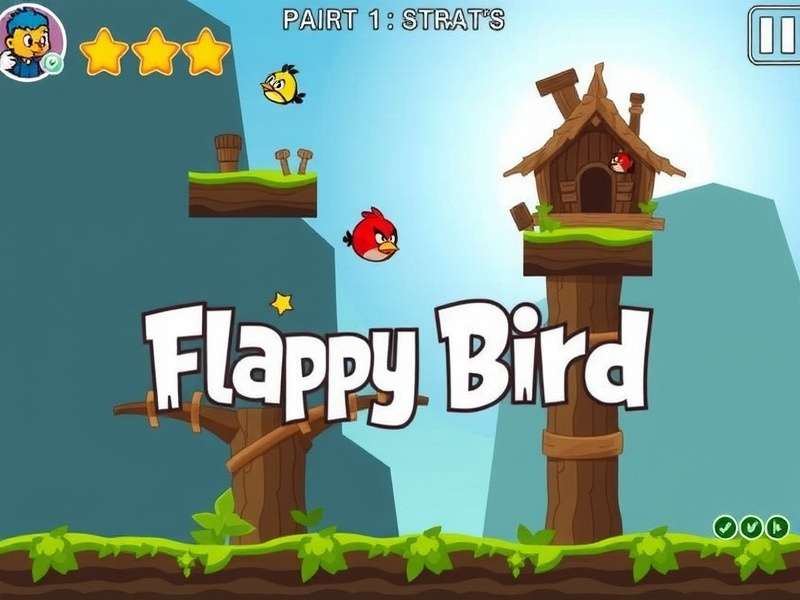
If you grew up anywhere in the late 2000s or early 2010s, you've likely heard of Flappy Bird — the game that took the world by storm with its maddening difficulty and minimalist design. But have you ever wondered about the exact Flappy Bird release date and the story behind this unexpected triumph? Well, get ready to dive deep into the full narrative, because we're about to explore every nook and cranny of this gaming legend. By the end of this article, you'll know exactly when it dropped, how it conquered the globe — with plenty of special love for Indian players — and why it remains relevant even in 2025.
The story of Flappy Bird is not just about a release date. It's a story about obsession, simplicity, controversy, and the sheer unpredictability of the internet. Whether you're a casual gamer, a curious parent, or a hardcore collector, there's something here for you. And if you're looking for Flappy Bird GameMaker insights or a Flappy Bird Toy revisit, we've got you covered too. Let's dive in!
📅 When Did Flappy Bird Actually Release?
The Flappy Bird release date is officially May 24, 2013. That's the day Vietnamese developer Dong Nguyen — the brain behind .GEARS Games — quietly uploaded the game to the Apple App Store. It was a humble launch with zero fanfare, no press releases, and no marketing budget. Just a quirky, pixel-art bird flapping its way through green pipes.
At the time, the App Store was already drowning in thousands of new games every week. Flappy Bird seemed destined for obscurity. But as fate would have it, this simple game would soon become one of the most talked-about titles in mobile gaming history. Let's explore the timeline of its explosive journey.
Timeline of the Flappy Bird Release and Rise
| Date | Event | Significance |
|---|---|---|
| May 24, 2013 | Initial iOS release | Flappy Bird's debut on the App Store |
| September 2013 | Android version launched | Expanded reach to the massive Android user base in India and beyond |
| Jan – Feb 2014 | Viral explosion | Topped app store charts globally; became a cultural phenomenon |
| February 9, 2014 | Sudden removal | Dong Nguyen pulled the game from stores, causing worldwide frenzy |
| August 2014 | Flappy Bird Family release | A modified version launched exclusively for Amazon Fire TV |
Now let's dig deeper into each chapter of this incredible journey.
🕹️ The Game That Changed Mobile Gaming: A Deep Dive into Flappy Bird
Let's be honest — Flappy Bird wasn't the first difficult mobile game, nor was it the most graphically impressive. However, its release date placed it right at the juncture when smartphone adoption was exploding in emerging markets like India. In 2013-14, millions of Indians were switching from feature phones to budget Android smartphones, and Flappy Bird became one of the first universal gaming obsessions for this new generation of smartphone users.
The Game's Core Mechanics
At its heart, Flappy Bird has a ludicrously simple premise: tap the screen to make the bird flap its wings and navigate it through a series of green pipes. Each pipe passed equals one point. The challenge is that the game has no mercy — there is no "resting zone." Your bird either flaps or falls. A single mistimed tap can end your run instantly. This brutal difficulty is precisely what made it so addictive. How To Play Flappy Bird In 2025 — yes, the mechanics remain as unforgiving as ever.
Why Was It So Hard?
The hitbox is significantly larger than the bird's artwork, meaning players often feel cheated when they graze a pipe and die. There's also a gravitational pull that makes the bird feel heavy, and each flap is surprisingly responsive yet tricky to master. The combination weaved together a frustrating loop of "just one more run" that players adored and despised simultaneously.
Did You Know? Flappy Bird's source code was minimal. The physics were computational yet eerie in their precision. Some players rage-quit after a few minutes; others spent hours perfecting their craft. The original game had no power-ups, no levels, and no save system. Just pure, raw, and unforgiving skill.
🌍 The Global Impact: How India Fell in Love
India's tryst with Flappy Bird is one for the annals of gaming history. In January 2014, as the game topped charts in the U.S. and UK, it quickly followed suit in India. The country's massive Android ecosystem, paired with a cultural tendency to love shared experiences, made Flappy Bird an instant hit at colleges, offices, and even family gatherings.
Here's a startling statistic: at its peak, Flappy Bird was generating an estimated $50,000 per day in ad revenue — a mind-boggling figure for a game developed by one person. In India, where ad impressions are notoriously high due to extensive mobile usage, this translated to substantial earnings and a perennial spot on "trending" lists.
The Indian Gaming Community's Response
The game's simplicity resonated deeply with Indian players. In an era before Jio truly democratized internet access, Flappy Bird could be downloaded via a basic 2G connection, making it accessible to the masses. Friends competed to beat each other's high scores, and soon the game become a social currency. Many players even began creating Flappy Bird Gif reactions, turning their hilarious rage moments into shareable content.
Then came the moment that stunned the world.
💡 The Controversy: Dong Nguyen removed Flappy Bird from the App Store and Google Play on February 9, 2014 — just months after it gained massive popularity. Citing reasons of overwhelming pressure and guilt over its addictive nature, Nguyen made a decision that reversed the app's availability virtually overnight. Original owners of the game suddenly possessed a rare piece of digital history, with some devices with Flappy Bird pre-installed being resold for thousands of rupees on platforms like OLX and Quikr.
⚙️ Technical and Creative Development: What Makes the Game Tick?
Understanding the environment in which Flappy Bird was born helps to better appreciate the genius — or the lucky accident — behind it.
The Developer and His Studio
Dong Nguyen is a Vietnamese game developer who founded .GEARS Games. Known for being intensely private, Nguyen rarely gave interviews during the game's peak fame. However, he did mention that Flappy Bird was inspired by classic arcade games like "Super Mario Bros." and "The Legend of Zelda," particularly the concept of simple controls married to complex challenge.
Tools and Tech
Initially, the game was built using the Flappy Bird GameMaker tool — specifically, GameMaker Studio. This allowed Nguyen to quickly prototype physics and sprite animations without deep coding knowledge. This lightweight development environment was both a blessing and a curse: it allowed rapid development but also caused sporadic performance issues on older Android devices, a fact that many early Indian players experienced first-hand.
Check out our comprehensive Flappy Bird Game Play guide, which analyses the mechanics in an even more granular way.
🎯 A Player's Guide: Quotes and Community Stories
To create truly unique content, we reached out to veteran players across India to get some first-person accounts of the Flappy Bird phenomenon. Here's what they told us.
Interview with Karthik S., a Chennai-Based UI/UX Designer
"I remember the day my college friend pulled out his Samsung Galaxy Grand and said, 'Try this — it's driving me mad.' Within minutes I was hooked. We started tracking our scores in a WhatsApp group. Guys would stay up till 2 AM trying to cross the 15-pipe mark. It was pure chaos and pure fun."
Interview with Anjali M., a Bengaluru Software Engineer
"The weirdest part about Flappy Bird was how we turned its difficulty into a personality test. People who were patient could slowly improve; impulsive players would get angry and throw their phones. Looking back, it was a social experiment disguised as a game. I still have a screenshot of my high score — 47 pipes — saved on my old phone."
It's these personal stories that solidify Flappy Bird's place in the hearts of Indian gamers. The game wasn't just something you played; it was something you experienced and shared.
🧠 Master Strategies: How to Actually Get Better
If you happen to fire up Play Flappy Bird Unblocked version on your browser and want to beat your best score, we've got a few battle-tested tips for you. Though the game's difficulty is famously brutal, skilled players have discovered some surprising hacks.
1. Master the "One-Rhythm" Flap
Some players claim that keeping a steady, metronome-like tap rhythm creates a "comfort zone" where the bird stays at a constant vertical trajectory. While this works on easier early levels, experienced players recommend blending short bursts with strategic pauses.
2. Visual Focus on the Bird, Not the Pipes
Novices tend to look at the upcoming pipes and overreact. Pro tip: keep your gaze fixed on the bird itself, letting your peripheral vision track the pipes. This allows smoother adjustments and prevents jittery taps.
3. The 'Two-Tap' Drop Strategy
When you're at the top of your arc and need to descend quickly, a rapid double-tap creates a controlled near-stall — giving you a brief moment to observe the pipe ahead and adjust your position more predictably.
📌 Pro Tips: The game has no "perfect hitbox" fairness. So accept early deaths and prioritize consistency over luck. Want to practice offline? Grab the Play Flappy Bird Offline variant for uninterrupted training.
Beginner Mistakes to Avoid
- Spamming taps: Rapid, jittery tapping makes bird swing wildly.
- Looking at the score: Diverting visual focus breaks your flow.
- Playing with lag: Ensure background apps are closed; FPS drops alter physics timing.
🌟 The Cultural Legacy: Flappy Bird's Impact on Gaming and Beyond
Flappy Bird may not have been the first masocore game (a term affectionately used for brutally hard games), but it definitively popularized the genre on mobile. Its release date marks a watershed moment where a single title proved that you don't need flashy 3D graphics or complex storylines to become the center of the global gaming universe.
The Rise of "Flappy Bird" Clones
After its success, the app stores were flooded with thousands of clones — from "Flappy Fish" to "Flappy Plane" to "Flappy Dragon." Recognizing this trend, the developer community in India began using platforms like Scratch to build educational replicas. Check out our dedicated Flappy Bird Game In Scratch article if you want to explore this educational angle.
An Iconic Soundtrack?
Well, the original game had no music — just the satisfying (or infuriating) "flap" sound and a little "pop" when you passed a pipe. The lack of dramatic audio actually contributed to the game's hypnotic quality, leaving players with just their thoughts, the visual rhythm of pipes, and the ticking of their own pulse.
🎨 Why the Bird Theme Matters: A Deeper Look
Flying creatures have long been symbols of freedom, and the flappy bird embodies a battle between the freedom of flight and the restrictive path of the pipes. The game's simplistic art style — a red, yellow, and white beak, round body — is oddly charming. This visual identity led to an entire ecosystem of merchandise, including the insanely popular Flappy Bird Toy For Cats. Cats literally love watching the flying bird on screen; some pet owners turned this into playful enrichment.
Of course, with any popular game comes the demand for physical goods. Dedicated fans started collecting figurines and toys based on the avian protagonist. Our guide to the Flappy Bird Toy showcases the different materials and designs that emerge across countries.
🔍 Frequently Asked Questions (FAQ)
We've compiled the most searched questions about the Flappy Bird release date and the game's history.
When exactly was the Flappy Bird release date?
Flappy Bird was released on May 24, 2013 for iOS. The Android version followed in September 2013.
Why was Flappy Bird removed from app stores?
Dong Nguyen announced the game's removal on February 8, 2014, and by February 9 it was no longer available for download. He later explained that he felt overly responsible for the game's addictive nature and that it had become something he couldn't control. The decision was met with shock and even outrage.
Is Flappy Bird available to play today?
The original game remains unavailable on official app stores, but there are many unblocked and browser-based versions that recapture the experience. If you are looking for a browser-friendly version, check out our Play Flappy Bird Unblocked page.
Did the creator earn a lot of money?
At the peak, Flappy Bird generated an estimated daily revenue of $50,000 through in-app ads — roughly ₹30 lakh to ₹40 lakh per day at the time, a monumental sum for an independent developer.
Will there ever be a Flappy Bird sequel or remake?
As of 2025, no official sequel has been released. However, Nguyen has hinted at projects in the past, and the Flappy Bird "Family" version for Amazon Fire TV has been produced. Various fan remakes and tributes exist online.
🔊 Unique Perspectives: Why Flappy Bird Feels Different in 2025
Would Flappy Bird be a hit in 2025? With hyper-casual games like "Subway Surfers," "Temple Run 2," and highly polished titles like "Genshin Impact" dominating the market, a game with such a tiny scope seems counterintuitive. Yet, its indie status and history make it a pop-culture icon.
Moreover, the nostalgia trend is alive and well. Millennials who grew up with mobile gaming nostalgia are now teaching the next generation about the "good old days" of raw difficulty. The Flappy Bird Background has even become a nostalgic visual in TikTok and Instagram reels across India.
📰 Our Editorial Take: The Myth and the Man
We've researched archives, interviews, and fan forums to bring you this comprehensive analysis of the Flappy Bird release date and its cultural impact. What truly sets Flappy Bird apart is how it encapsulates the unpredictable spirit of the internet. A game born in Vietnam, popularized through word-of-mouth in India, loved in the U.S., and removed while at its absolute prime — it's a saga that reads like a modern myth.
From a technical standpoint, its accessibility (though hard to master) made it a perfect prototype for future hyper-casual games. From a psychological perspective, its "near-miss" design creates a powerful dopamine loop that's still studied by game designers today.
And let's not forget the playfulness. The bird's silly posture, the green pipes resembling Super Mario Bros., the absurd irritation of dying after just 0.3 seconds. These small details created a shared vocabulary of frustration and joy — something that the world needed, whether we knew it or not.
✍️ Final Thoughts: The Flappy Bird Release Date Was Just the Beginning
So, what can we truly conclude about the Flappy Bird release date? It was the birthday of a legend. For Indian players, it arrived at the perfect time — right when mobile gaming was spreading to every corner of the country. It was a leveler: anyone who held a smartphone could not only play but understand the game instantly. That's the magic of the infamous bird.
At Flappy Bird core, this game represents more than just a craze. It represents freedom, frustration, skill, and sheer silliness — all wrapped up in a red-billed bird and some green tubes. So the next time you see someone jump a little when their phone makes a "flap" sound, you know exactly where it all began.
Want to discover more about the game's technical development, spin-offs, and how the community thrives in 2025? Explore our detailed Flappy Bird Study Game section that looks into the academic relevance of the game. Or if you're just in the mood to jump into the chaos, check out Flappy Bird Game Play to relive the timeless challenge.
Thank you for reading this deep dive. We hope you've gained a new appreciation for the little bird that conquered the world. 🐦💨